



Samsung’s newest flagship phone, the Galaxy S25 Ultra, continues the South Korean tech giant’s strategy of refining an existing formula, playing it conservative with hardware, while relying on software polish and new AI features to set itself apart from the crowd.
This is a strategy that Google and Apple have also taken with their last flagship releases: mostly minimum hardware upgrades, but instead selling you on artificial intelligence.
When you consider Apple and Google are Samsung’s only competitors in the company’s largest market (North America), then it’s understandable why Samsung is going this route.
I’m of two minds on how to approach this review. The hardcore gadget geek enthusiast in me — the one who at 21 spent almost his entire part-time job salary to import a niche Japanese portable media player — is disappointed, because Chinese phones have been offering new design overhauls and hardware almost every generation. The best Vivo and Xiaomi flagships, when they launch, they come with the newest Sony image sensors that are not even six months old. Meanwhile, Samsung, Google and Apple are reusing the same camera hardware for three to four years. So the enthusiast in me is disappointed.
But there’s another part of me that knows most people are not diehard tech enthusiasts. Most people fit into the average consumer camp, who are much more pragmatic with their tech purchases. Things like availability on their local mobile carriers, large selection of third party accessories, or easy access to authorized repair centers, all matter more than image sensor sizes.
And ultimately, it’s just a lot easier to buy a Samsung Ultra phone than, say, a Xiaomi Ultra phone in most chunks of the world. So when I factor in all that and review the S25 Ultra from that perspective: the average consumer in Hong Kong, Los Angeles, Seoul, or London, then the S25 Ultra’s relatively minor hardware upgrades aren’t so glaring. It’s still a highly polished, very capable phone with, in my opinion, the best suite of AI features to boot.
After using this phone heavily for the past five weeks, I can also say there are lots of subtle little things that do not show up in the spec sheet that make this phone very enjoyable to use.
The power user phone enthusiast would likely prefer the Vivo X200 Pro or Xiaomi 14 Ultra over the Galaxy S25 Ultra, but they are a niche crowd. For the majority, the S25 Ultra still represents the best in Android right now.
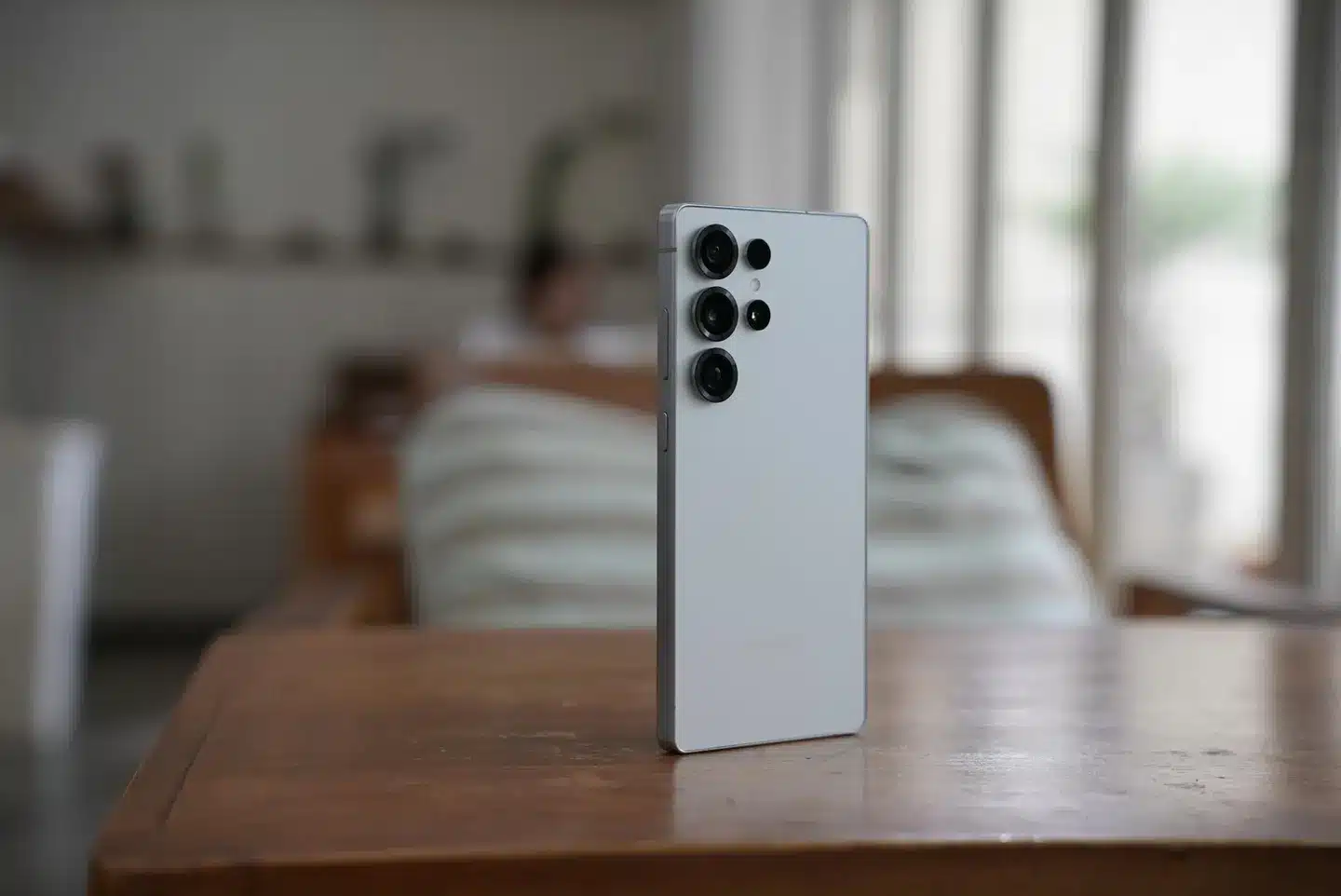
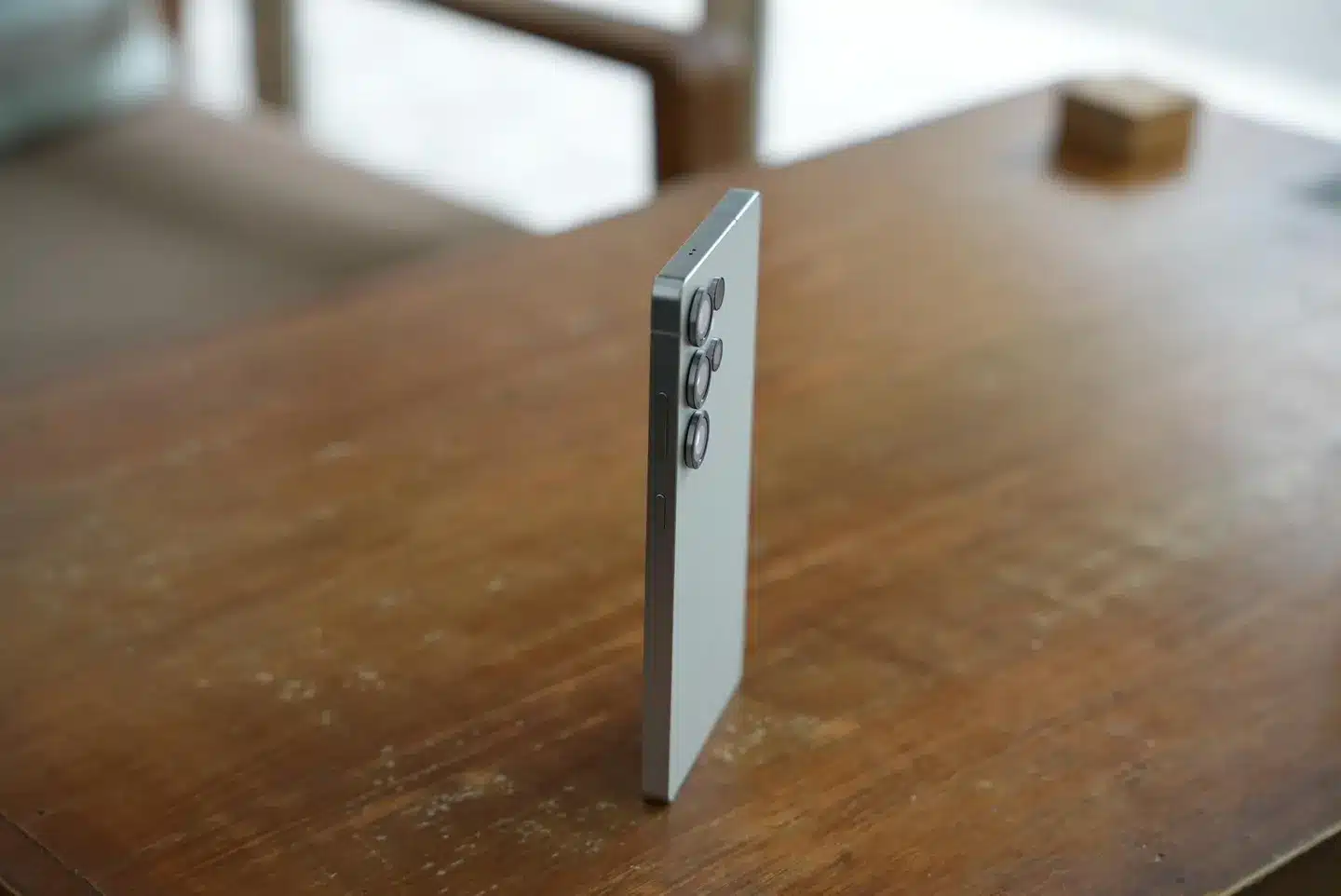
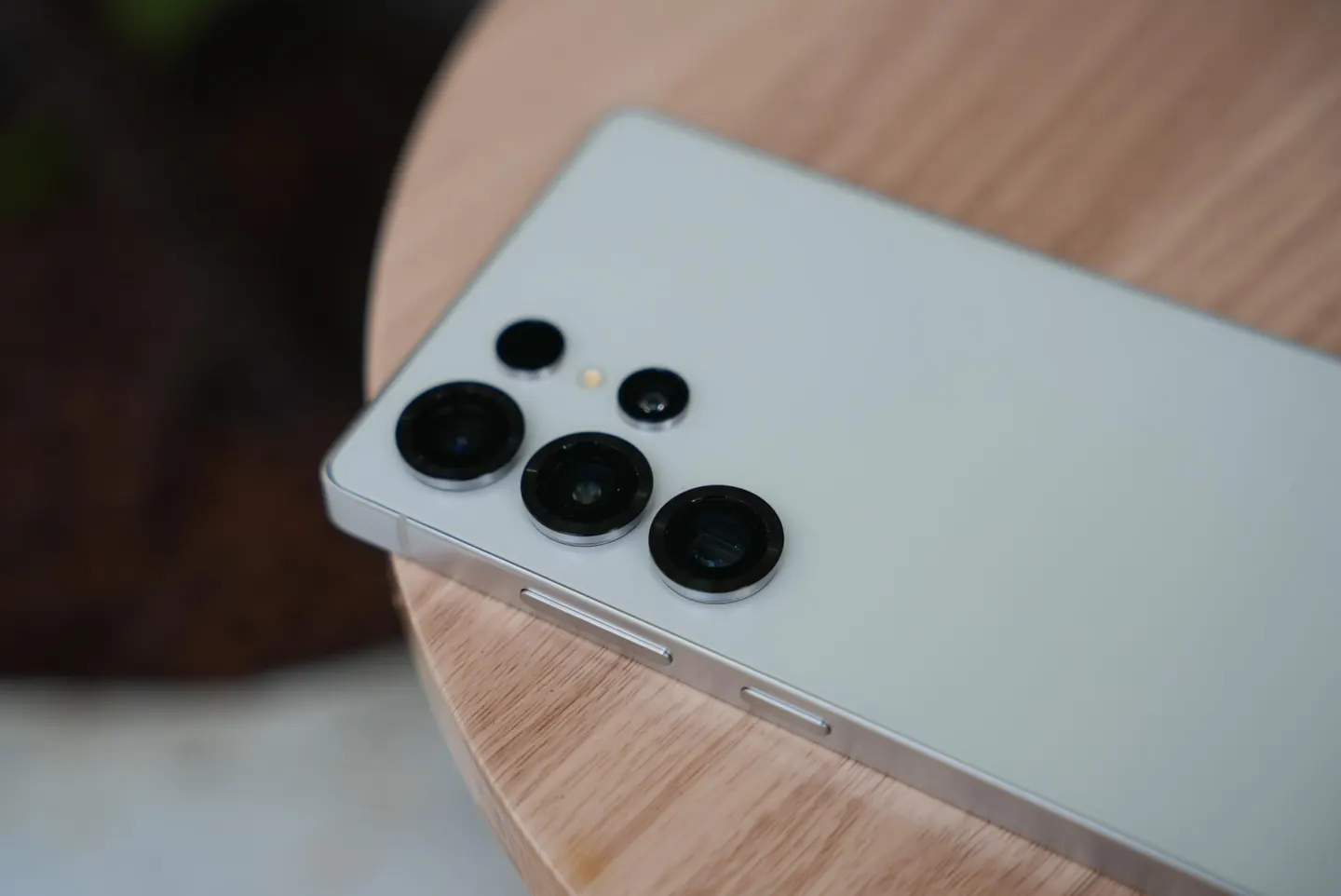
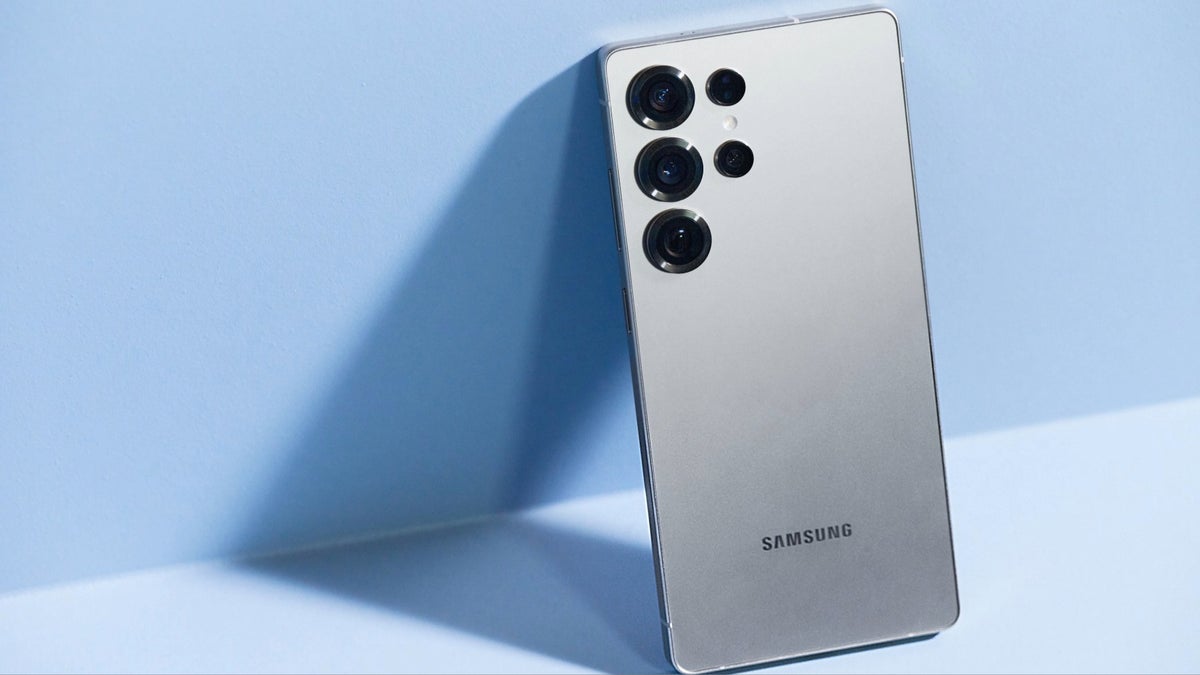
The S25 Ultra gives slight overhaul to the existing design language of the S Ultra phones: the camera module remains mostly the same so the phone is instantly recognizable as a Samsung phone from the back. But the previously sharp 90-degree angle corners are now rounded, and the previously rounded metallic frame is now flat, giving the phone a boxier look — but with softer corners.
The phone is also lighter and thinner than last year by 14g and 0.4mm. The lighter weight is definitely noticeable, which coupled with the rounded corners make the phone much more comfortable to hold.
The chip powering the phone got the expected annual upgrade to the Qualcomm Snapdragon 8 Elite “for Galaxy,” with the last two words signaling that this is a slightly overclocked chip customized by Qualcomm to give Samsung devices a slight edge over other phones with the same chip. The slightly superior CPU does not matter much, as modern silicon in the last few years offer more computing power than 99.9% of us will need.
The cameras and displays got minor upgrades. The ultra-wide camera this year got bumped to a higher megapixel count of 50, while the bezels wrapping the display got a hair thinner, just enough that the screen size now measures 6.9-inches instead of 6.8-inches.
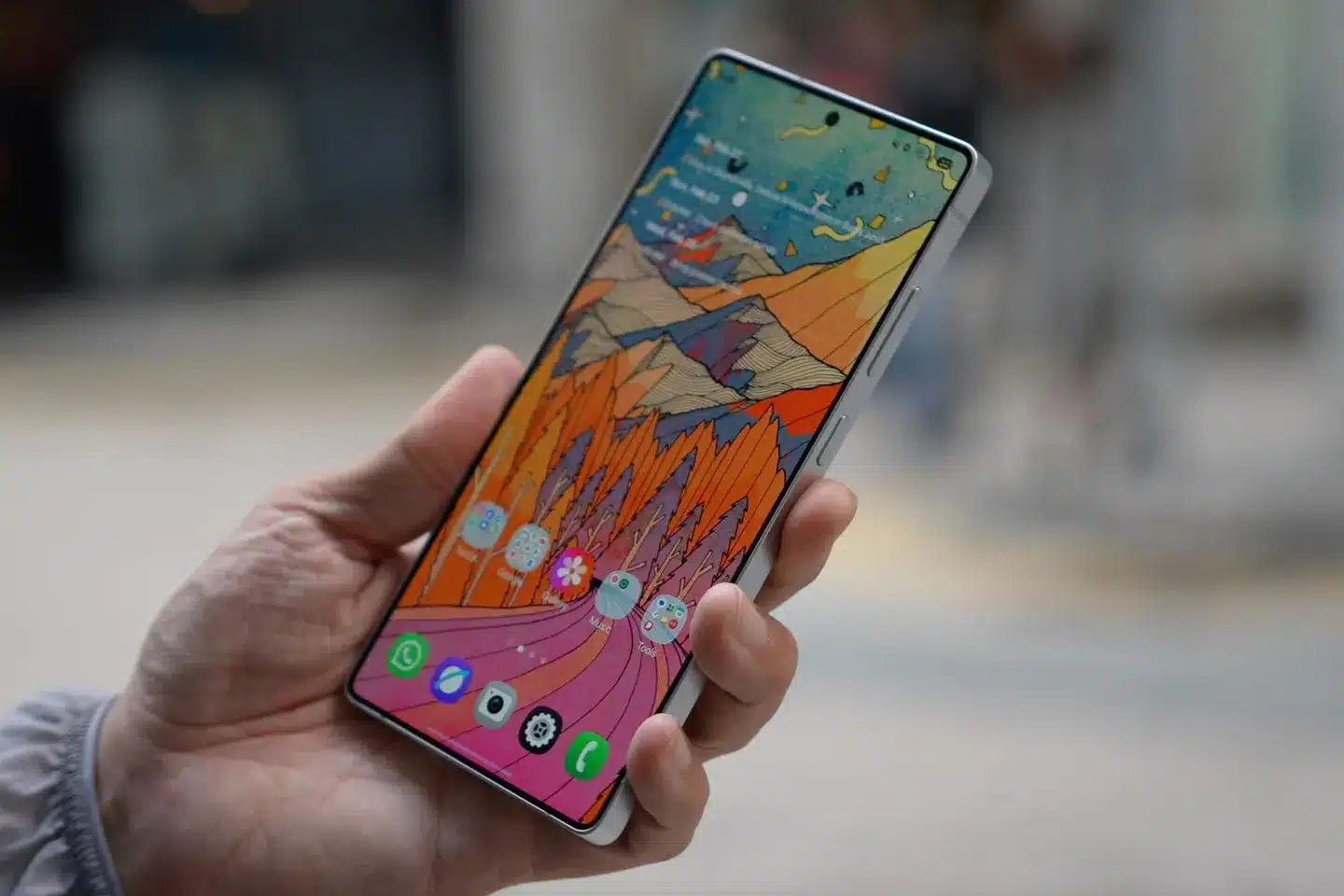
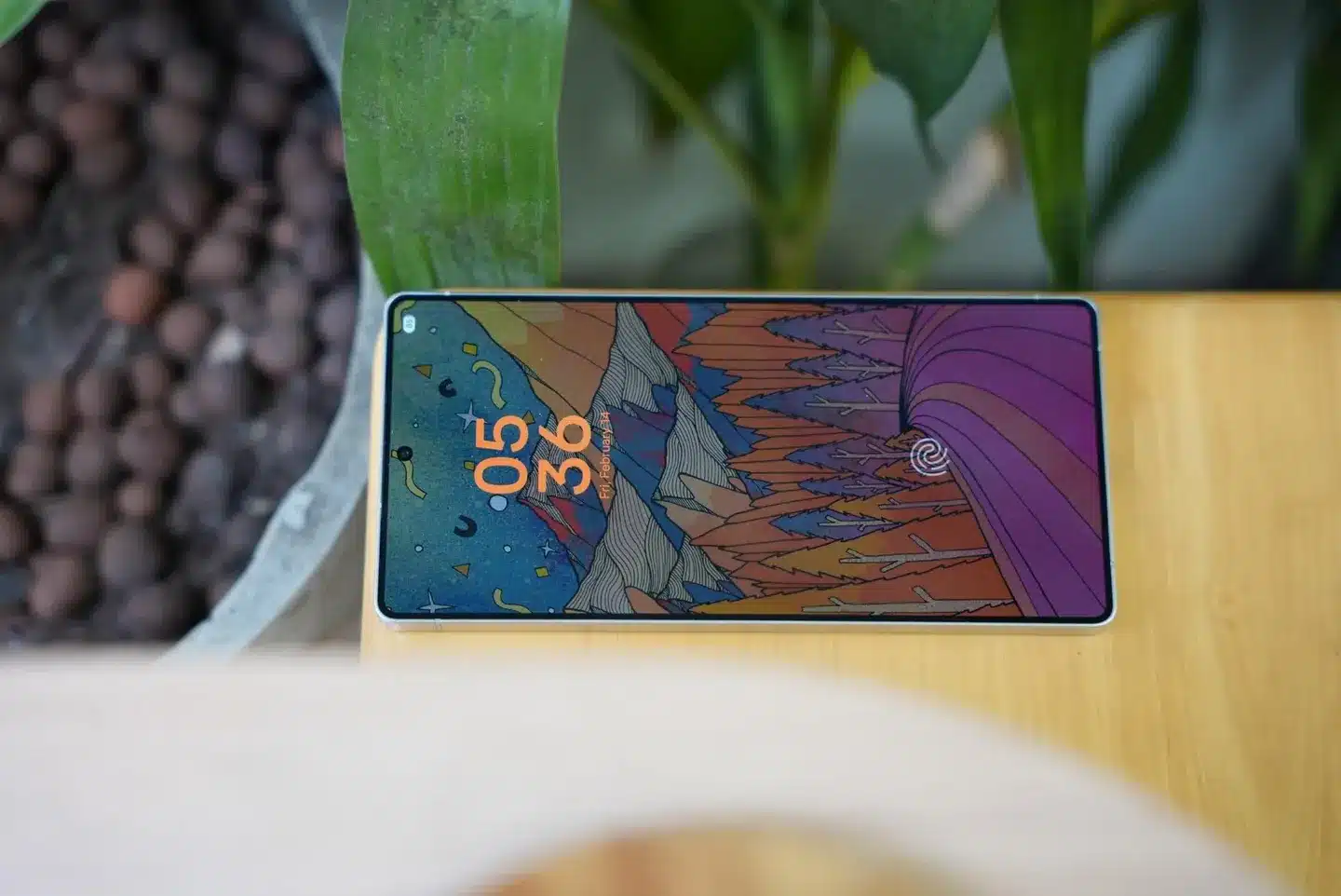
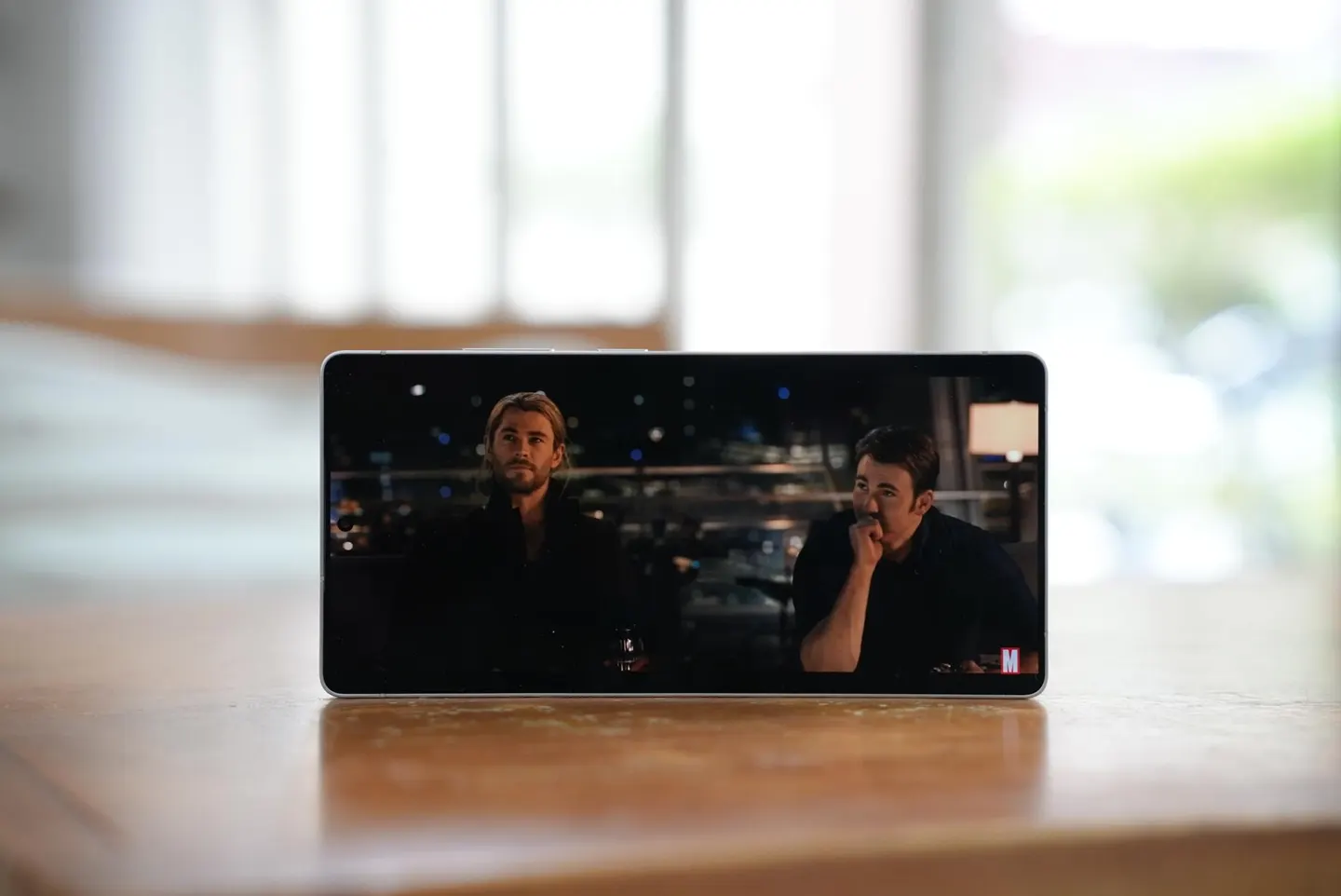
The screen still has an excellent anti-reflective matte coating, and is sharp and colorful. The bezels around it are also among the thinnest I’ve seen yet in a phone. It’s just a beautiful panel to look at for the majority of people.
The cameras perform well, even if only one of the six sensors got improved from last year. But Samsung’s software image processing is mature, and this is a capable system that can satisfy all but the most picky users.
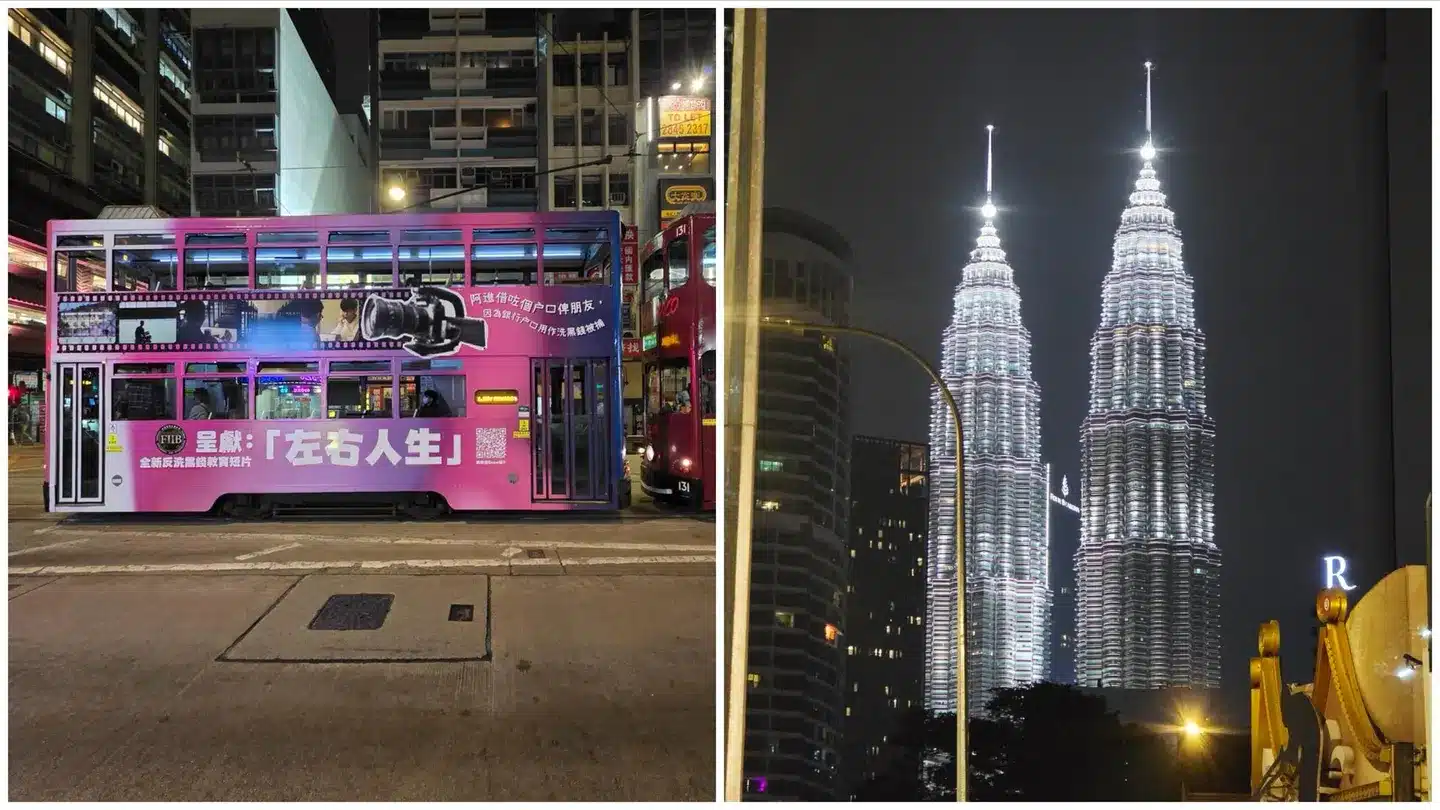
The main camera is a 200-megapixel shooter with a respectable sensor size that can grab very fine details in photos. But I personally like to shoot at longer focal length, so I turn to the 3X and 5X zoom (about 70mm and 120mm) often, and they can grab some very nice portraits of human subjects. During the day, these portraits at 3X or 5X are sharp and look lovely. At night, there is a bit of noise and haze as the smaller sensor has to dial up the ISO to bring in more light. See the collage below.
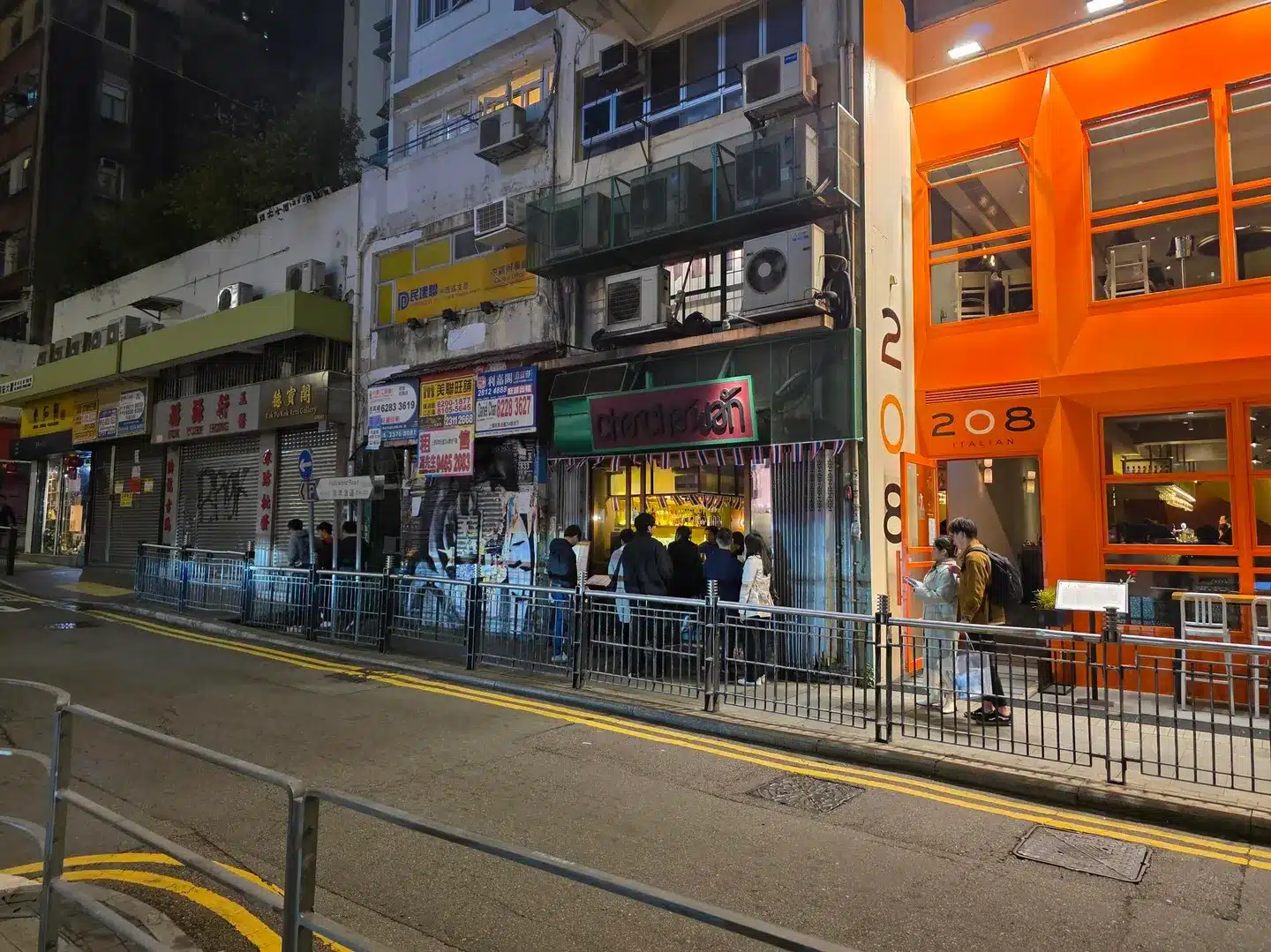
The ultra-wide camera’s upgrade to 50-megapixels does pay off, as ultra-shots are noticeably sharper and better quality at night.
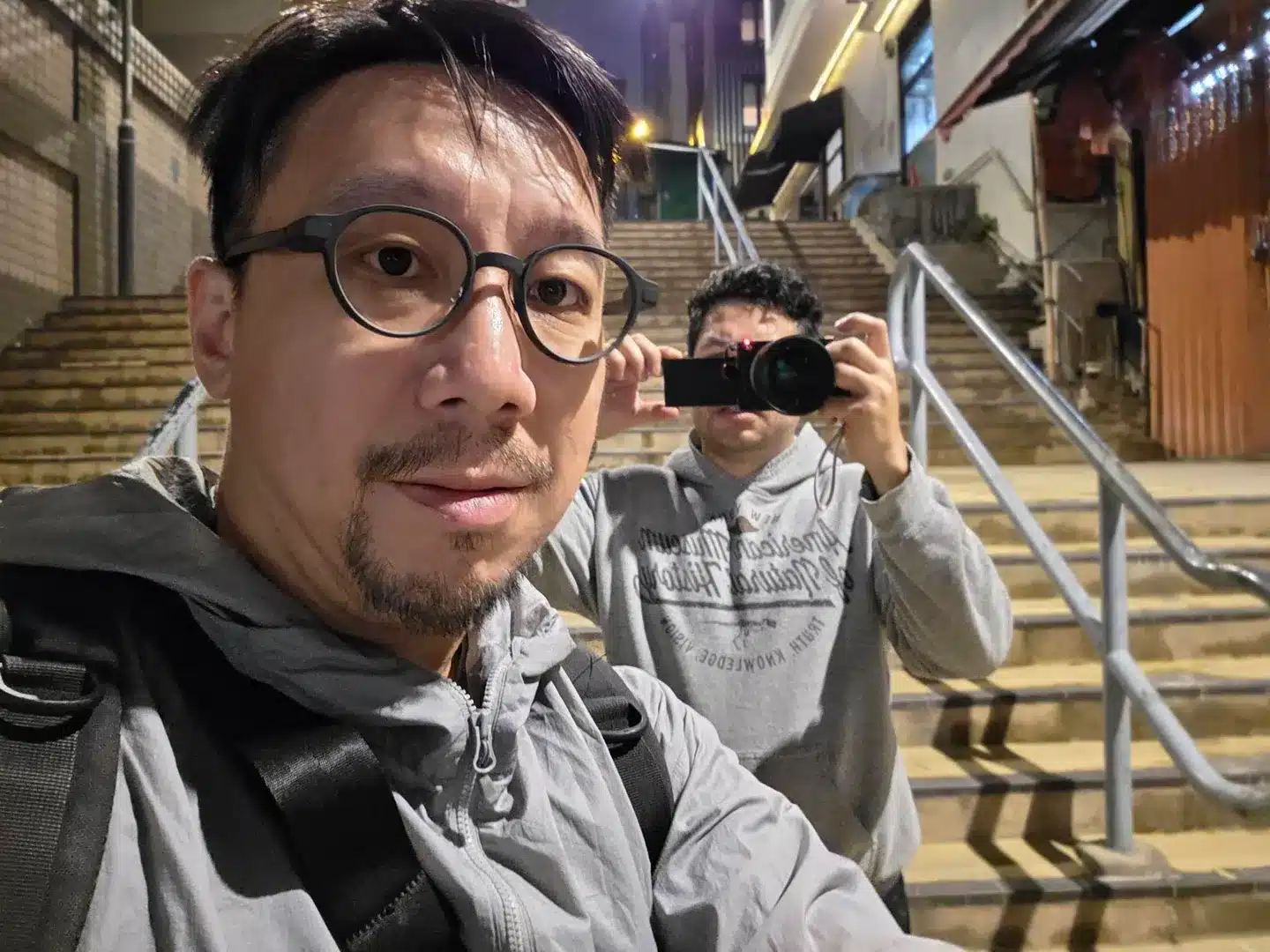
I am not a selfie person but I also want to give a compliment to Samsung’s selfie camera, which produces very aesthetically pleasing selfies, even in low light conditions. I am not a fan of taking selfies on iPhones due to Apple’s tendency to show every single flaw on my skin; and Chinese phones tend to apply too much skin smoothing filters. I find Samsung’s approach to be the happy balance.
Like I said, for majority of casual users, these cameras will serve all their needs. But if you’re nitpicky and you have seen the best Chinese phones like me, then you’d notice Samsung’s 3X lens is a bit below par in 2025 due to being a years-old sensor. It’s only 10-megapixel and the sensor size is tiny. Samsung’s 5X zoom lens, while very good and easily beats the iPhone’s zoom, loses to the world-class zoom lenses used in Vivo and Xiaomi’s latest phones. See the samples below: Samsung’s image looked good in a vacuum, but compared to the same shot snapped by an upcoming Chinese “Ultra” phone launching in a couple of weeks, the difference in quality is noticeable. It’s because the latter zoom lens is newer and larger.
Still, this is nitpicky territory: 5X zoom shots in low light situations is not photos many casual users take. If you shoot with the main camera during the day, the S25 Ultra is as good as any.
The battery capacity is the same — 5000 mAh — and the S Pen stylus is still here, although it loses Bluetooth connectivity from last year. This has been a bit of a controversial topic, but I never used the Bluetooth feature much so I don’t mind. But I do understand why it’s a bad look Samsung willingly removed a feature from a phone without a price cut.
That’s about it in terms of hardware overview. Like I said, Samsung is going that Apple and Google route of playing it very safe and making small tweaks year-to-year instead of trying to push for the newest components like Chinese brands do.
Instead, the S25 Ultra, like last year’s S24 Ultra, doubles down on AI features, and they actually work very well. In fact, I find Samsung’s AI features to be the most useful among all the phones, even more than Google’s own Pixel line, and definitely better than the underbaked Apple Intelligence.
Generative AI photo editing: add or remove elements from real photos with original pixels
Live two-way interpretation of voice calls: you speak English, the other party speaks Korean, and the AI in between translates the conversation in real-time
Convert voice recordings or phone call audio into text transcripts that can then be summarized
Summarize any chunk of text on websites or documents
Circle to search: immediately search what’s showing on the screen with a scribble
Intelligent search of photos using conversation phrases like “find me that photo of me having sushi in Europe”
Cross-app digital assistant action: I can ask the S25 Ultra a relatively complex query that requires accessing multiple apps, like “add the Oscar telecast in Hong Kong to my calendar” and the S25 Ultra’s digital assistant will be able to do so in about 10 seconds. This normally requires searching the web for when the Oscars are showing in Hong Kong, and then adding the date and time to a calendar, which is a two-step action that would take at least a minute.
The latter can be quite useful, and it works surprisingly well. I can even ask the phone to find flights from one city to the other, and the assistant will find flights from Google Flights and show me the information.
The image search using casual language works well too. If I search “sushi in Europe,” it will show me the time in 2023 I got tired of eating bread and pasta in Milan and went for sushi instead.
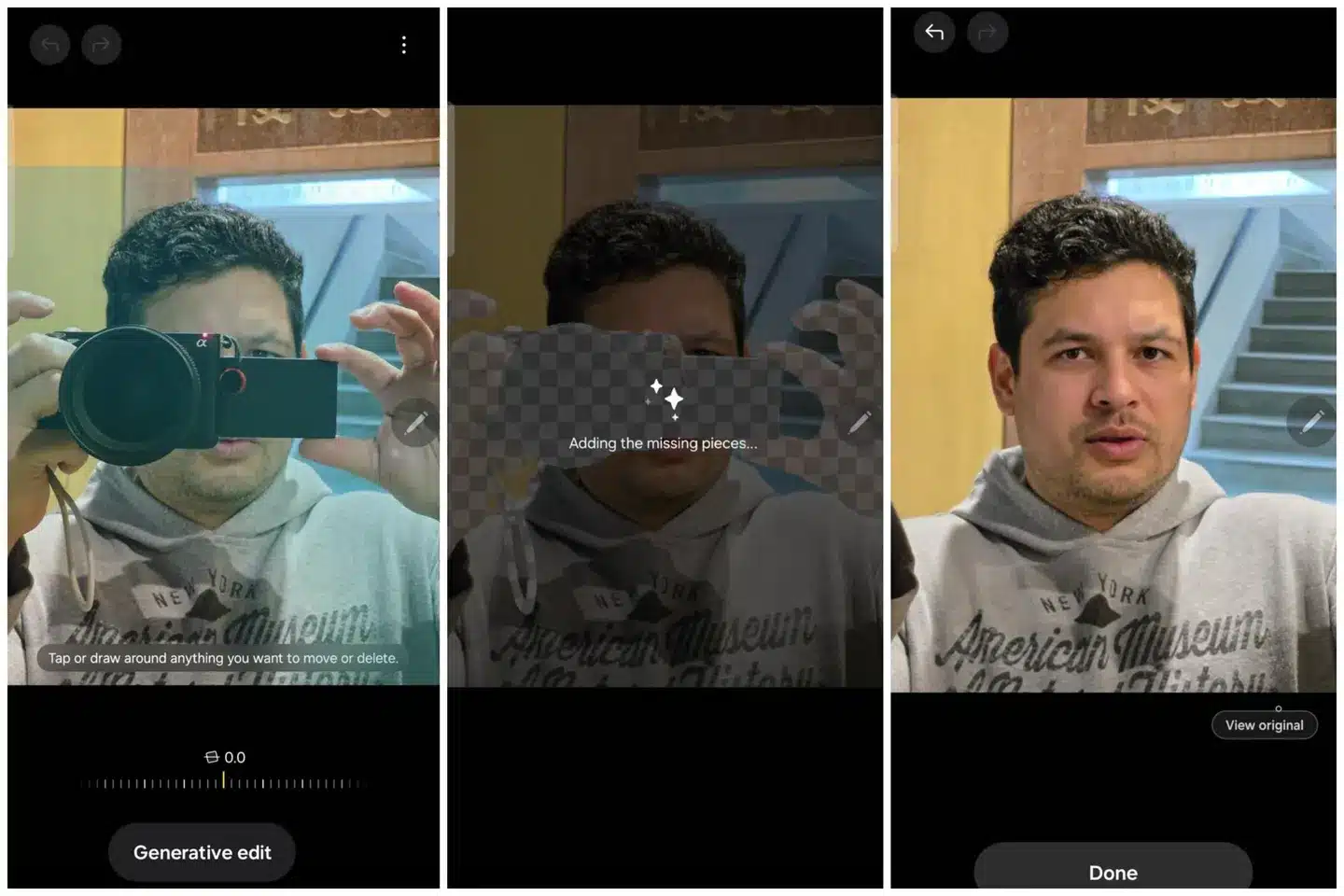
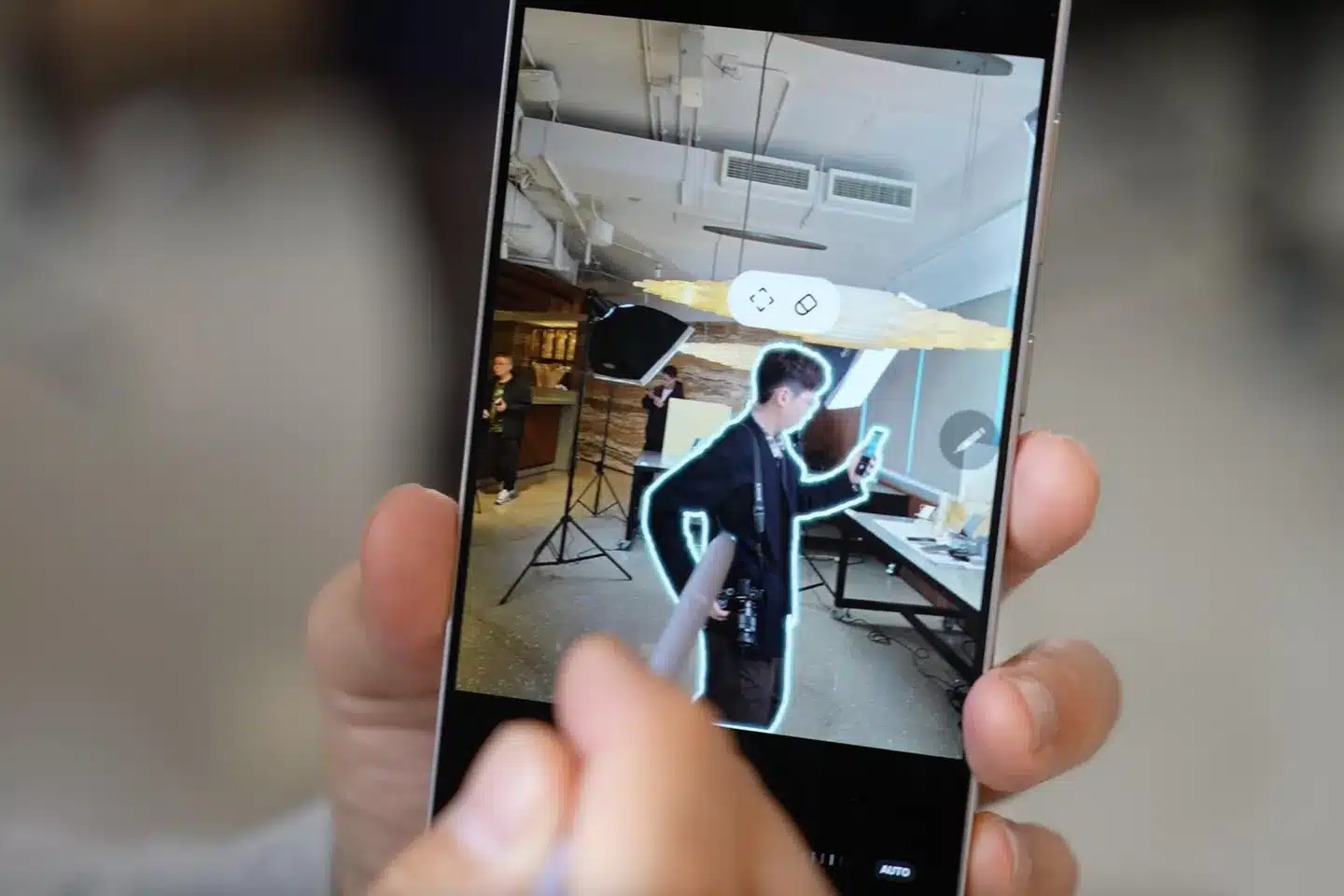
I also find Samsung’s generative AI editing to be the best in the business and perhaps overly powerful without boundaries. For example, the selling point of generative AI object eraser is you can remove things from photos, and the AI will generate original pixels in its place so the image appears natural. Every phone can do this now, but on iPhones or Google Pixels, the AI seems to shy away from erasing or generating anything that has to do with a human face. So while you can generate a new t-shirt or even new legs for someone on the iPhone or other Android devices. You wouldn’t be able to generate a chunk of their face. Samsung’s AI does not seem to mind.
The above collage shows the original image on the left: my friend holding a camera that blocks his face. I used S25 Ultra’s Galaxy AI and removed the camera, and then the generative AI created pixels to fill in the missing frame, thus recreating his face. The craziest part: the face is pretty accurate to how my friend actually looks.
No other phone brand would even attempt such an edit. It would tell me it cannot complete the action if I try to remove a camera that’s blocking a human face. I’m not sure if this is Apple or Google or Xiaomi setting boundaries on what can be edited, or that their AI lack the ability to.
I am fully aware this level of manipulating a photo can be unethical or make people uncomfortable. But the debate over whether this should be allowed is another topic to be had elsewhere. For me, as a tech reviewer, I’m merely stating this is the most advanced generative AI editing I’ve seen yet, and it’s available freely on a smartphone for anyone to use.
So while the S25 Ultra’s hardware didn’t upgrade too much, the software AI features are genuinely helpful and fun.
But, a major caveat: none of these AI features are exclusively tied to the S25 Ultra hardware, meaning these features can easily run on the S24 Ultra or even S23 Ultra, it’s just whether or not Samsung wants to push the software update to older phones. While Samsung has not confirmed if these features will roll out to the two-year-old S23 phones, it will go to the S24 phones eventually. So the biggest selling point of the S25 Ultra are features that are available on the last generation Samsung flagship phones too.
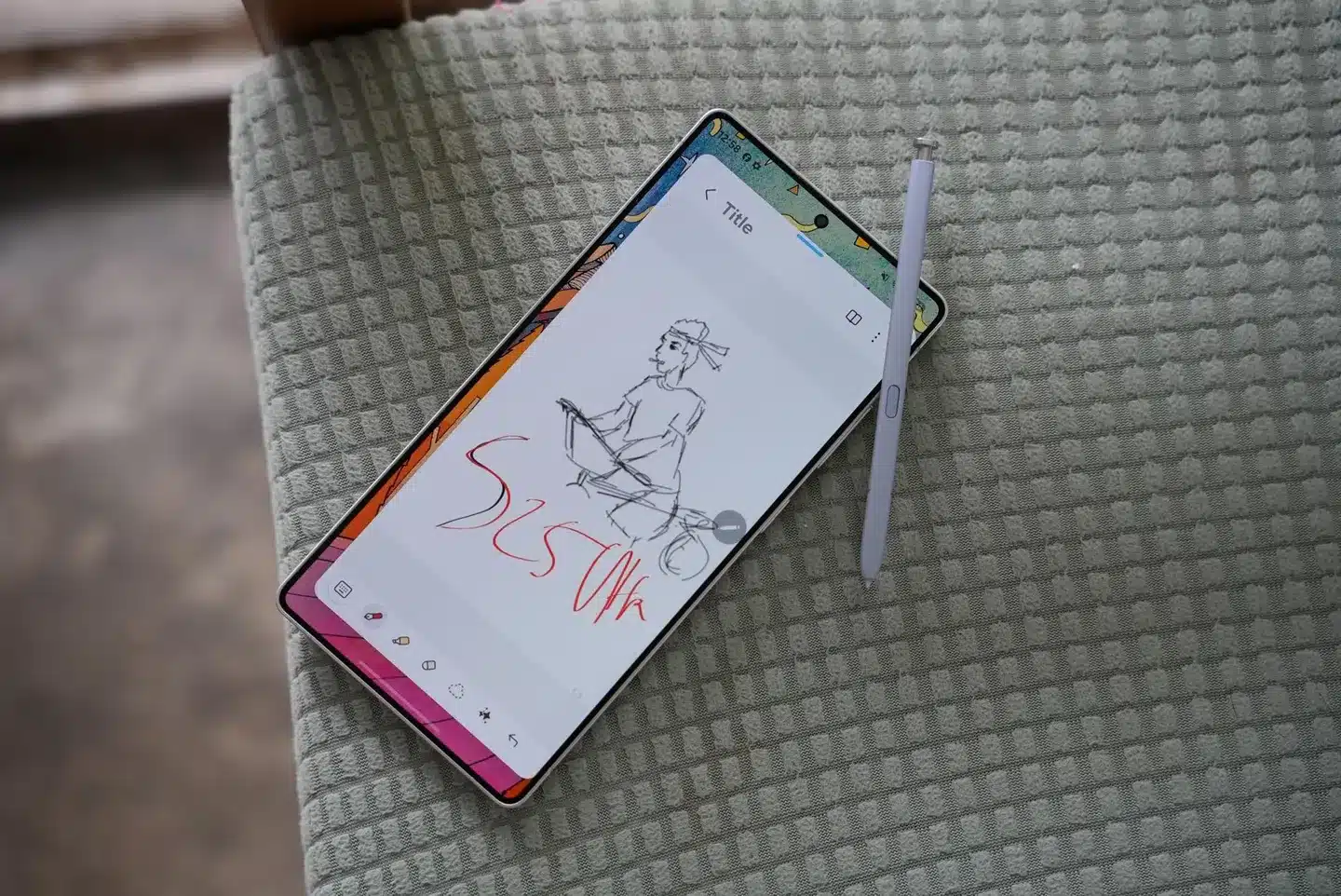
There are lots of little things about the S25 Ultra I quite enjoyed using. The S Pen stylus comes in handy when I need to make fine photo edits, and I enjoy sketching for fun. I also sign lots of virtual documents so the S Pen is definitely welcomed. As mentioned, the loss of the Bluetooth capabilities doesn’t bother me too much. But I understand the gripe from others.
Battery life is also satisfactory, even if it’s worse than the best Chinese flagship phones. It is true that the best phones from Vivo or Honor or Xiaomi can go at least 2-3 hours longer on a single charge, but if the S25 Ultra is already enough to last me all day outside, then those extra few hours doesn’t matter to much other than give peace of mind. For example, if I am outside continiously for 14 hours straight, my S25 Ultra will survive the whole time, but get home with about 10-12% battery, which is what I consider to be the battery anxiety zone. A Vivo X200 Pro under same usage would still have like 24% battery. So I’d be more at ease, but it’s highly unlikely I’ll ever need to use that final 20% of juice.
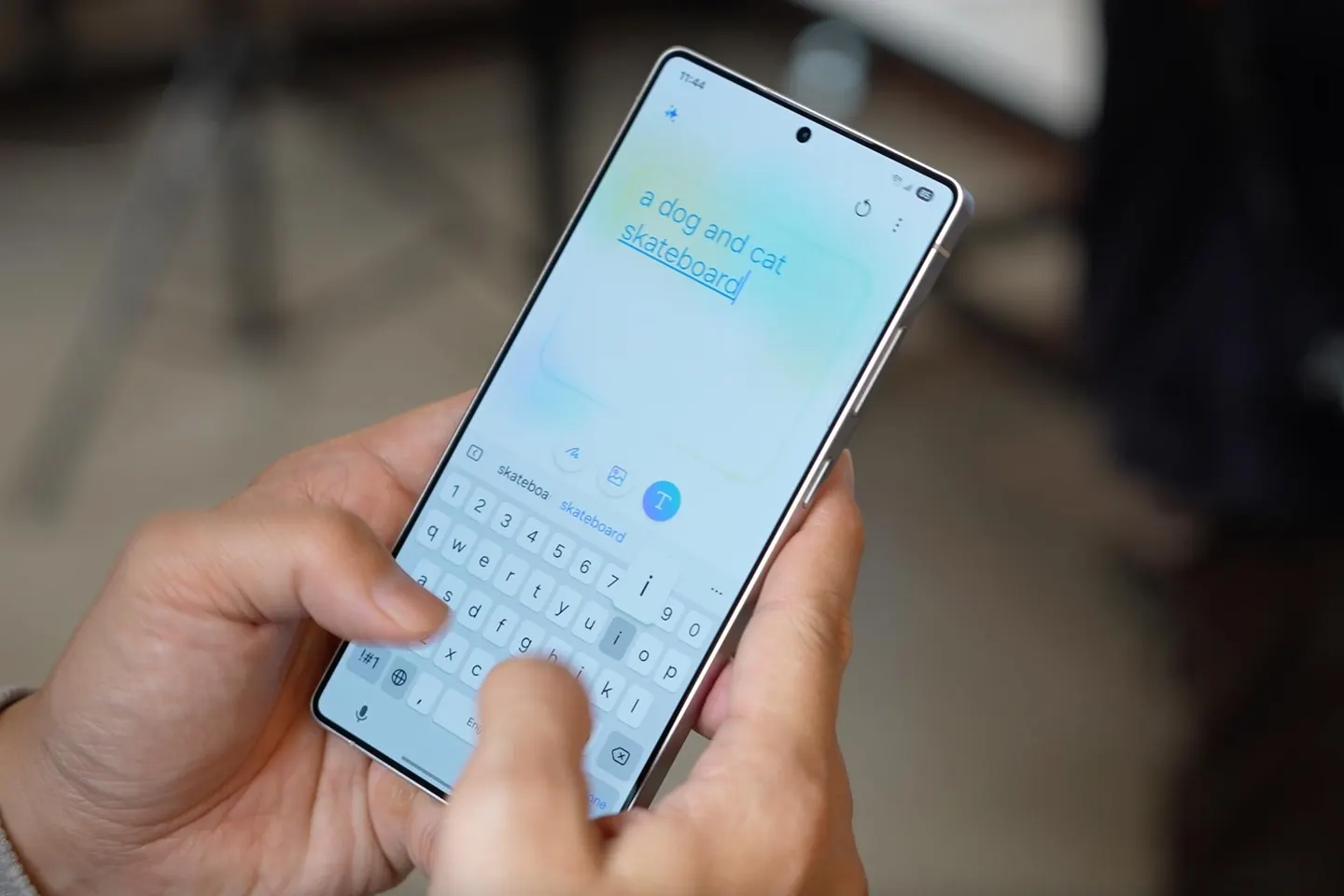
I also find the S25 Ultra very comfortable to type on due to the large flat screen. The keyboard just has a bit more space to spread itself than on many other Android devices. It’s a minor thing, but I can type with slightly lower typo rate on the S25 Ultra.
So overall, even though I know Samsung could have given the S25 Ultra a bit more of a hardware upgrade, particularly in the battery and camera sensor front, the overall use experience is still very, very enjoyable. The little smarts of Galaxy AI make my day to day activities easier, and the screen is beautiful to look at, the phone comfortable to hold.
Again, I reiterate: there are Chinese phones with noticeably larger batteries and better cameras on the market at roughly the same or lower price as the S25 Ultra, but they may be very hard to buy where you live; they may not fully support the mobile network you’re on; they don’t offer as great a collection of AI features, and you may not be able to get it fixed easily if you break it.
Factor in all that, and the S25 Ultra still has plenty of appeal. The S25 Ultra isn’t cheap, starting at $1,300 in the US and HK$9,898 in Hong Kong, but it’s the most premium and feature-packed of the “big three” mainstream phone brands (Apple and Google).
One of the best smartphone i never see this i personally recommend to buy this .